
Sai's Wonderful Writing
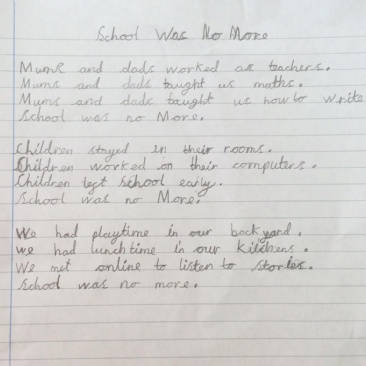
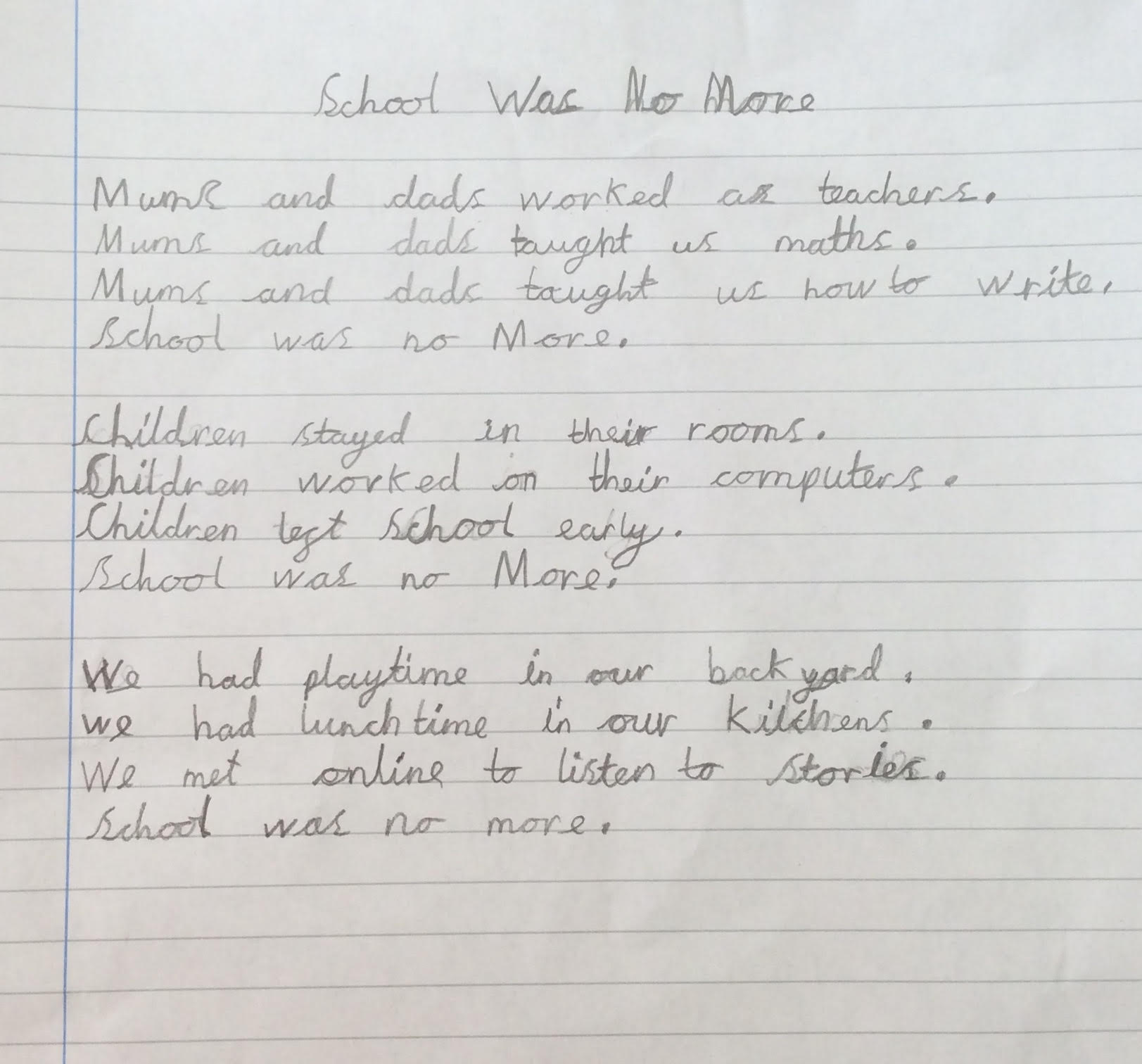
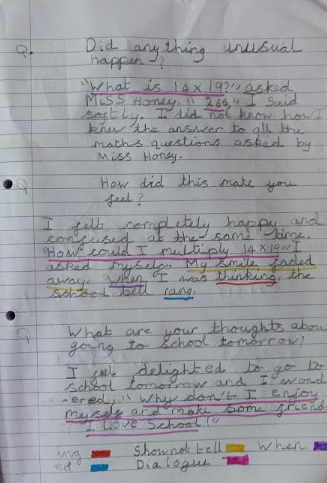
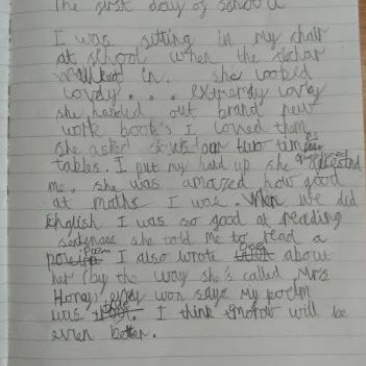
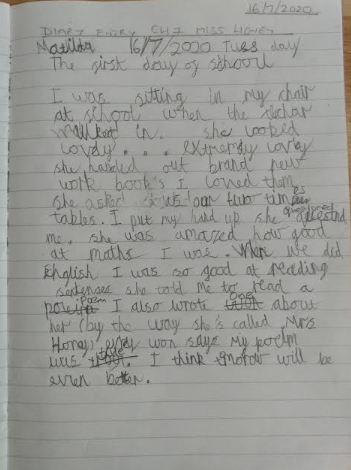
What a fantastic piece of narrative Sai.

Keep up to date with all the exciting activities and events happening in Year 2 by following us on our blog.
What a fantastic piece of narrative Sai.

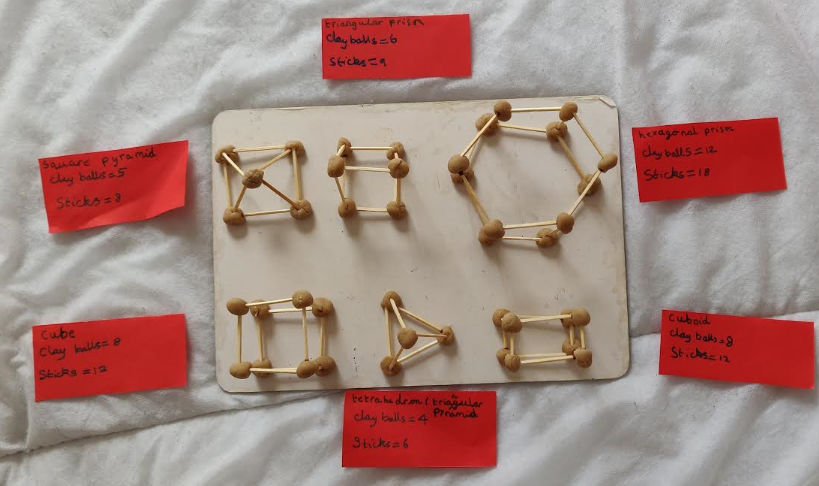
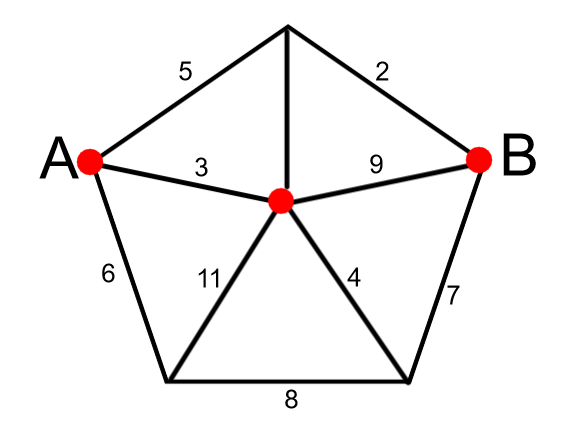
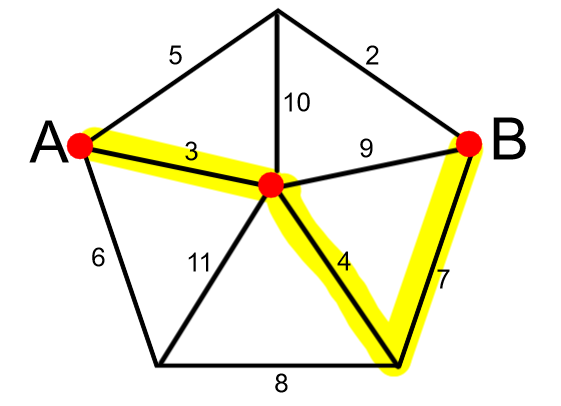
Wow! Sai, we love the way you have approached this problem in a clear and systematic way.

Skeleton shapes are made with balls of modelling clay and straws.
This shows a cube and a skeleton cube:

How many balls of modelling clay and how many straws does it take to make the cube?
Here are some piles of modelling clay balls and straws:

Look at the shapes below and decide which piles are needed to make a skeleton of each shape.

Extension: Can you make a skeleton shape out of modelling clay and straws?
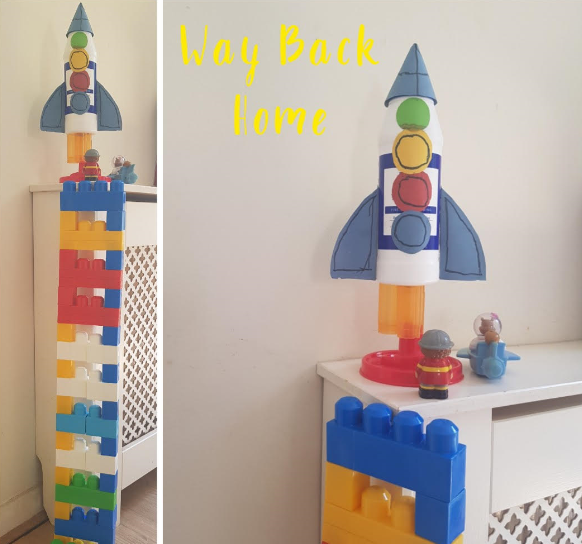
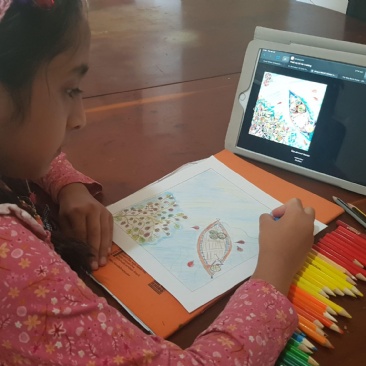
What a great design. We love the way that you have only used a few really simple geometric shapes. However, when you place 6 tiles next to each other it looks really incredible.

Write each of these digits on a piece of paper and cut them out.

Draw a place value grid that looks like this:

Place each digit card into a position on the place value grid to create a 3-digit number. e.g. 694
If you use all the digit cards, what is the smallest number you can make?
If you use all the digit cards, what is the largest number you can make?
Can you use a systematic method for working out ALL the possible 3- digit numbers you can make?
Can you arrange them from smallest to largest?
EXTENSION: What happens if you add another digit card- a 5 for example. Does this mean you can make more different 3-digit numbers?
Heera, we love the water wheel you created.

Well done Heera, we love this writing.

What are more useful, letters or numbers?
Would it be a good thing if animals could talk?
What is braver- being scared of something and then doing it anyway or not being scared in the first place?
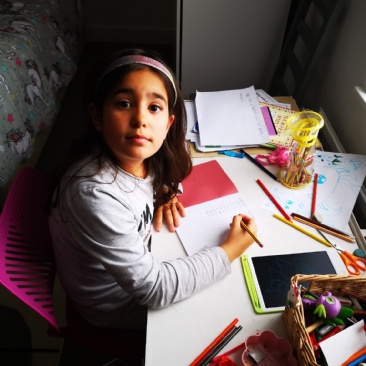
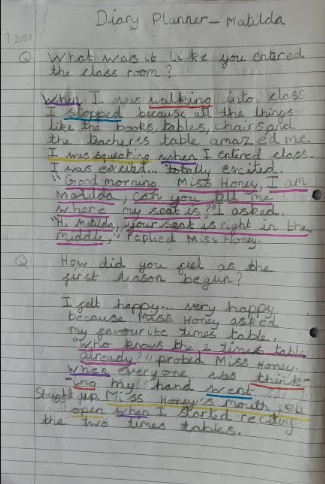
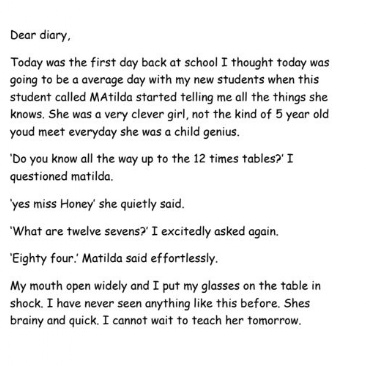
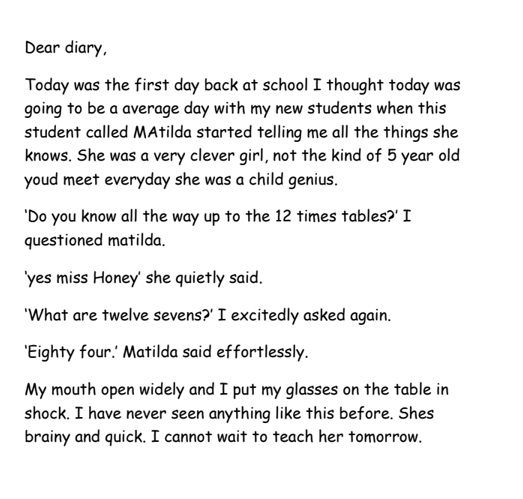
Wow! Jessica, we love the range of different types of sentence you used. Also, the way you included well punctuated, direct speech was amazing.
It sounded just like something Roald Dahl would write.

Alana, we love the way that you have included a range of different sentece types to interest the reader.
Also, the way you included well punctuated, direct speech really added to your work.


Equipment for 1 water wheel
2x sturdy paper plates
Ruler and pencil
Plastic tub
Length of dowel longer than the width of the tub
Scissors
Sticky tape
Recycled plastic cups, pots or paper cups
Permanent marker
Stapler
Jug or watering can
Water
To Make the Water Wheel
1. Measure and mark the centre of the two paper plates.
2. Perforate the plates with a pencil at the marks.
3. Push the dowel through the two plates.
4. Staple a minimum of three cups snugly between the two plates.
5. The cups should be evenly spaced and all facing the same direction.
6. Mark one of the cups prominently with a permanent marker.
7. Balance the wheel width-ways across the tub.
Investigation
Steadily pour the water from a jug into the top cup of the water wheel and watch it begin to rotate as the water flows. Count how many rotations the wheel makes using 1 litre of water?
Make a Prediction
If you have more water, will the wheel turn more times?
Prove it!
Wow! Ayda- it is wonderful to see that you have been writing to some new pen-pals.