
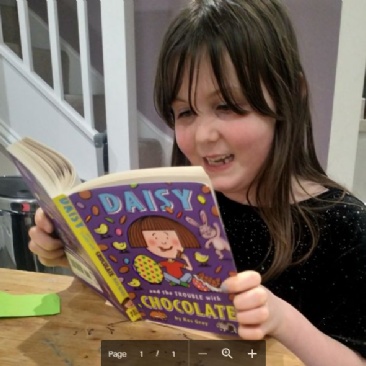
Phoebe Reading!
Published 18/01/21, by Charlie Mackinnon
It is great to see you reading at home Phoebe! Keep up the good work.
Keep up to date with all the exciting activities and events happening in Year 2 by following us on our blog.
It is great to see you reading at home Phoebe! Keep up the good work.
Remember to read at home for at least 20 minutes today. Read the great 007 and Simultaneous Action Sentences that the class wrote last week.
Today we are going to take all the great ideas from last week and put them together to create a wonderful piece of first person descriptive writing. You can use the sentences that you created last week or you can select sentences from the class bank of ideas which is attached to this post.
Watch a video in which Mr M models how to complete this activity:
Now it’s time to create your complete first person description from Toby’s point of view. When it is complete, please send it into us so we can give you feedback and share your work on the blog.
Today, we want you to extend your understanding of multiplication by completing a reasoning problem:
It doesn't matter which way around you put the factors in a multiplication calculation, the product is always the same.
True or False?
First, watch Mr M’s learning video in which he explains how to go about solving this problem:
When you think you have enough evidence to prove that the statement is either true or false, please send it in to us so we can give you some feedback and share your thoughts on the blog.
Last week, you spent time mastering the 2 times table. Now use this understanding to solve the problems on the attached worksheet. You only need to watch this video if you need extra help:
Spr2.2.3 - 2 times-table on Vimeo
Get active with this 8 minute workout from Jo Wicks:
(1) Active 8 Minute Workout Featuring Alfie | The Body Coach TV - YouTube
Pick an activity from the Sport, Exercise and Health section of the Wider Curriculum Home Learning Matrix.
As always, if you need with any of these activities, please do not hesitate to contact us via the class email address.

In reading, we will continue to read The Witches. We will also set at least one comprehension activity. Please remember to tune into our live session on Thursday at 9:45 if you get the chance. Keep on sending in the lovely pictures of you reading at home so I can add them to the blog.
In Maths we will deepen our understanding of multiplication by completing a reasoning activity. Next, we will learn two techniques for solving multiplication problems. Finally, we will explore how to select the most efficient method for specific multiplication problems.
In English, we will complete the descriptive writing from last week. Then we will turn our attention towards diary writing. We will write from the perspective of Samuel Pepys and create a diary account of the night of the Great Fire of London.
We will also set P.E, ICT, R.E and Art and Design activities which mirror our regular timetable.
Please look out for our daily blog posts and do not hesitate to contact us if you need any help or support.
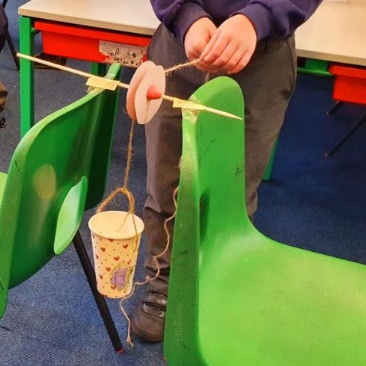
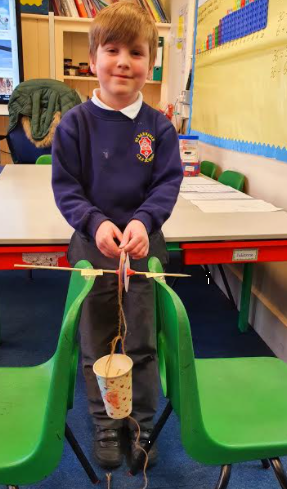
We created some fantastic pulleys in Beech CLass today. Here is a picture of Stanley with his pulley:

Get the Billy Goats to the Green, Green Grass!

Each week Mr Mackinnon is going to set you a challenge on a Friday afternoon that you can complete over the weekend. This challenge is completely optional.
This week’s Friday Challenge is all about the Three Billy Goats Gruff. First, watch Mr M tell his version of the Three Billy Goats Gruff:
Alternatively, you could watch this other version of the story:
The Three Billy Goats Gruff - Books Alive - YouTube
In both versions of the story, the Billy Goats Gruff think that the only way to get to the green, green grass on the other side of the river is to cross the troll’s bridge.
Let’s change this version. Let’s think of things that we could build to help the goats get to the other side of the river:
-a new bridge?
-a raft?
-a zip wire?
-a pulley?
-a catapult?
Decide upon a way of getting the goats to the other side of the river. Then build and test it. When you feel that you have built a successful method of getting the goats to the other side of the river, please take a video or send a picture of it in action to your class email address. We will announce the winner of the challenge in next Friday’s celebration assembly!
Good luck!
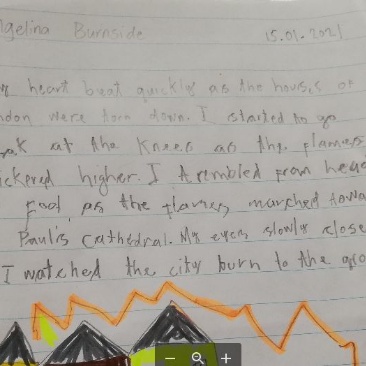
I love these sentences! They really show how Toby felt.

Congratulations to:
Aiyana
Oscar
Einoras
Rowan
Both at home and at school, your work has been incredible this week and you really deserve to be our Stars of The Week!
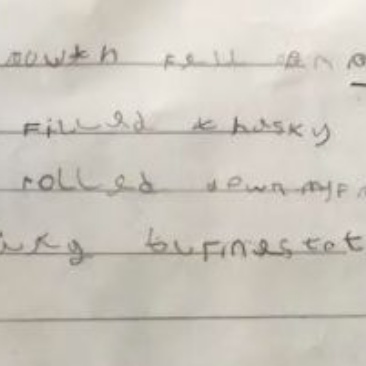
What great simultaneous action senteces. These really show the audience how Toby felt!
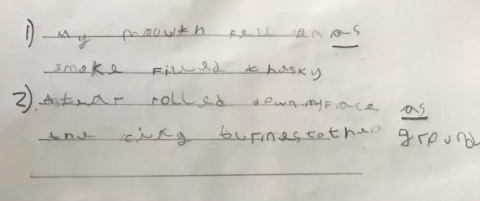
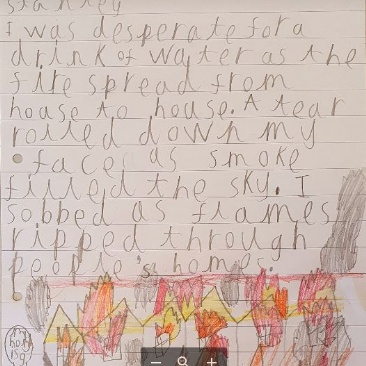
Here are the great simultaneous action sentences that we have created in class today:
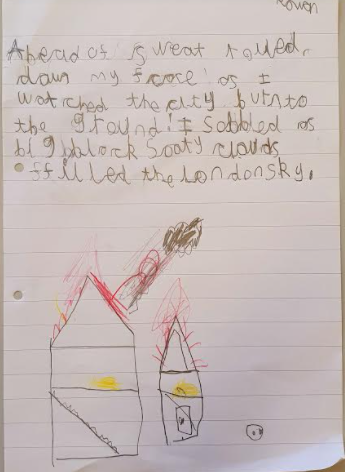
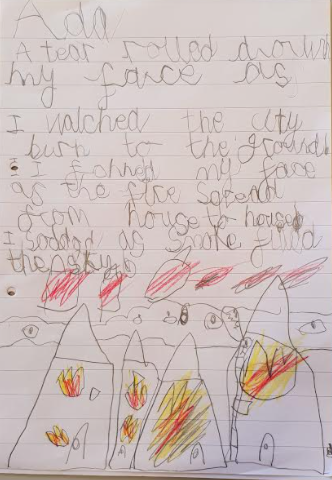
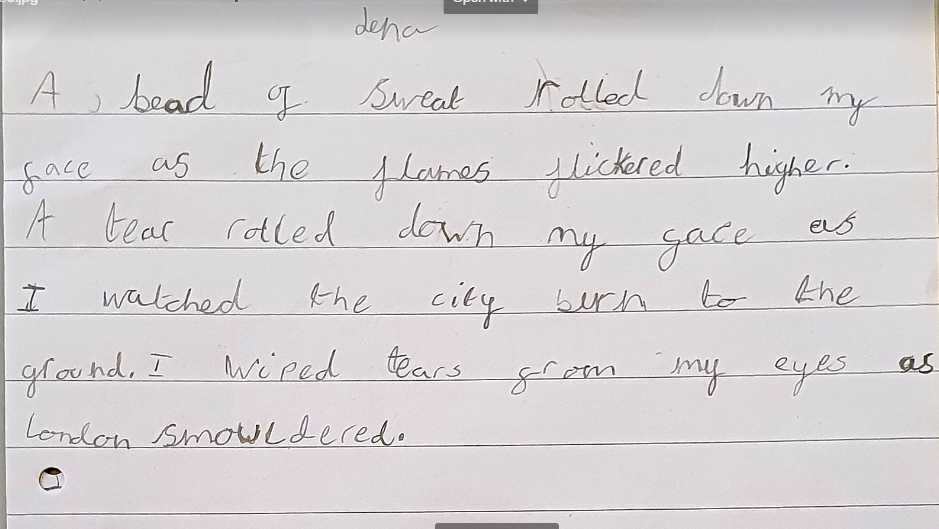
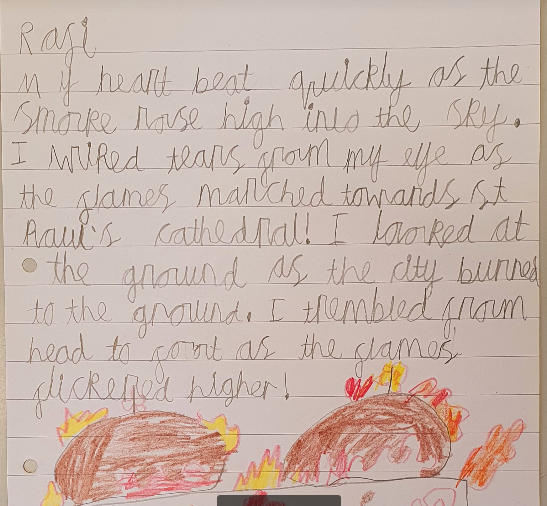
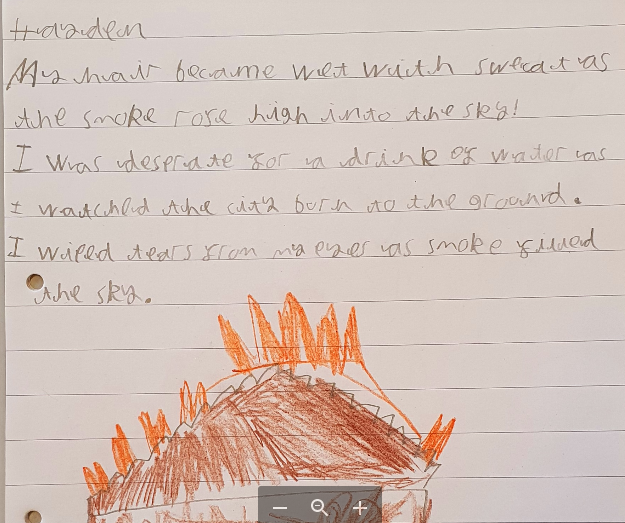
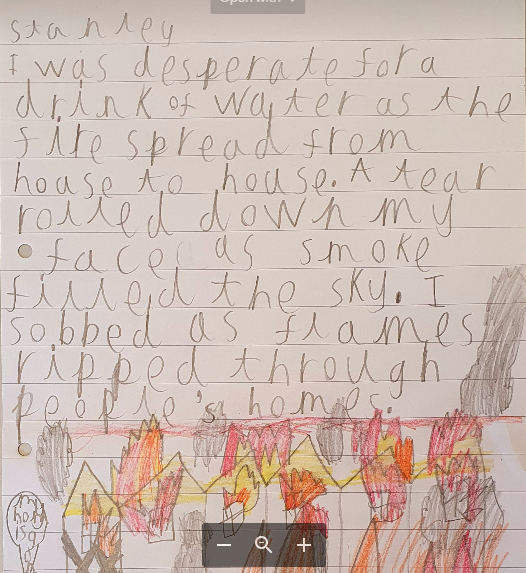
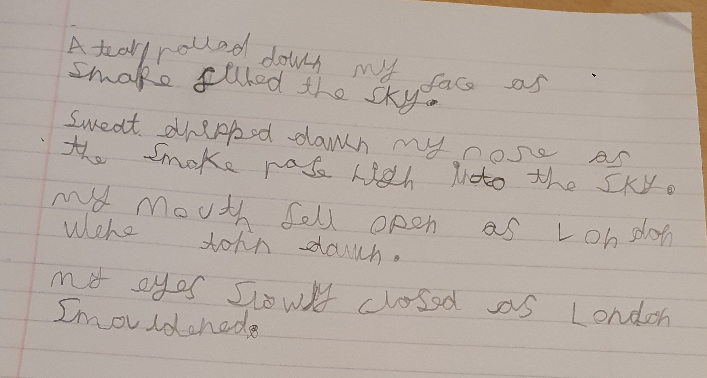
Eva- we love the simultaneous action sentences you created. They are so well written and grown up that we cannot believe a Year 2 pupil has written them.
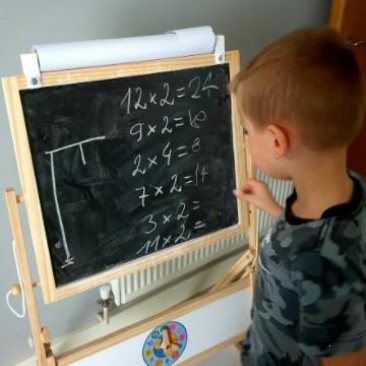
Einoras- we love the way that you have converted a game that you enjoy playing to help you learn your 2 times table.
Has anyone else in the class got an interesting way of learning their times tables?

Remember to read for at least 20 minutes at home today. Then listen to Mr M as he reads the next chapter of The Witches.
The first thing that we want you to do today is to create some simultaneous action sentences which SHOW the audience how Toby is feeling.
Please watch Mr M’s ‘Simultaneous Action Sentence’ learning video:
Use the ‘Simultaneous Action Sentence Help Sheet’ that is attached to this blog post to create your own simultaneous action sentences.
Can you create a simultaneous action sentence to SHOW that Toby is feeling scared?
Can you create a simultaneous action sentence to SHOW that Toby is feeling sad?
Can you create a simultaneous action sentence to SHOW that Toby is feeling hot?
When you have created at least 3 simultaneous action sentences of your own, please send them into us so we can give you feedback, post them on the blog and add them to a set of class ideas that will be used on Monday.
Watch this learning video which challenges you to complete multiplication problems with the support of pictures:
Spr2.1.5 - Multiplication sentences using pictures on Vimeo
Now complete the ‘Multiplication Problems from Pictures’ worksheet.
Continue to practise your 2 times tables and doubling skills. If you think you are starting to become very fluent on your 2 times tables, test yourself by completing the 2x table MyMaths activity which has been set for you. I will also set you some 2x table activities to complete on PurpleMash as well.
'To use junk modelling equipment to make moving structures'
Our Friday afternoon design challenge this week is to make a pulley using whatever junk modelling equipment you have around the house.
One way of making a pulley uses cardboard, a plastic water bottle with lid, scissors, glue, a wooden kebab skewer/stick and thread/string.
Here is a link to watch a video which demonstrates how a pulley could be made using these materials:
Video How to make a pulley - YouTube
Cut out 2 cardboard circles, bigger than the plastic bottle lid. Pierce a hole (ask your adult for help) through the bottle lid and the 2 cardboard circles. Push one cardboard circle on the skewer, then put glue on both sides of the bottle lid and push on the skewer, then add the second cardboard circle. Make sure the lid is in the middle of the skewer and sticks to both the cardboard circles. Cut the plastic bottle in half and use the lower half. Make 2 holes opposite each other in the plastic bottle near where you cut it in half. Use enough thread to tie through both sides and pull upwards to be able to move over the bottle top between the cardboard circles. To test the pulley, lay the stick over 2 chairs with the bottle half on the floor. Turn the stick to wind the thread around the bottle lid and the bottle half should rise from the floor.
Pulleys are used for all sorts of reasons in everyday life:
-Elevators.
-Wells.
-Exercise Machines.
-Construction Pulleys.
-Theatre Systems.
Keep an eye out in the real world for any examples of pulleys that you can see.
If you are looking for an extension activity, why not try to use junk modelling materials to build another moving structure of your own design.
Please send us pictures of the pulleys and other moving structures you build so we can add them to the blog.