
Oscar's Board Game
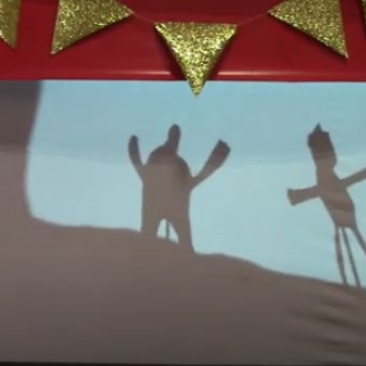
Wow! Look at the plan for Oscar's board game. I can't wait to see what the game ends up looking like.

Keep up to date with all the exciting activities and events happening in Year 2 by following us on our blog.
Wow! Look at the plan for Oscar's board game. I can't wait to see what the game ends up looking like.

Eva, we love the way you used a number-line to help you add multiples of 10.
Join us for live registration.
In today’s lesson, we are going to explore how to calculate change. We are going to use a technique called ‘Finding The Difference’.
Please start by attending the live lesson. If you cannot attend this session, we will do our best to film it and add the link here for 24 hours after filming. Here is the link:
Once the live lesson is over pay another visit to Mr M’s shop. Pick an item from the shop and imagine you are paying with a £1 coin. Use the ‘Finding the Difference’ technique to calculate the change you would get from the shop keeper. Repeat this process for at least 5 separate items.
Extension 1: Can you calculate the change if you bought an item with a £2 coin?
Extension 2: Can you calculate the change if you bought an item with a £5 note?
Remember to read at home for at least 20 minutes today. Please also have a go at the attached reading comprehension activity all about Knights and Dragons. If you need help reading the text, please read it with an adult. Then you can pick the level of challenge for the questions you want to answer independently.
You can find the link to this session by visiting the following site:
Sevenoaks School Outreach Activities: STEMagination Week 2021
Click on the Monday 1st March activities and find today’s ‘Bubbles and Balloons’ Workshop. Here you will find a link to the session. The password for this session is: pop-bang
Please note, this is NOT a live session. The link will be live and can be viewed any time between 8:30 and 12:30pm. The session will last for about 50 mins.
Here are some of the questions that we will investigate:
Can you make a bubble last forever?
Can bubbles be made square?
Are you brave enough to stick a skewer in a balloon?
Can you make a balloon helicopter?
You be wowed by the giant bubbles and whizzing balloons.
Today we will be exploring how to add multiples of 10 to single and 2-digit numbers. Start by watching Mr M’s learning video:
Now play the adding on multiples of 10 game modelled in the learning video. You will need some single number cards, a dice and a pen and paper.
An introduction to running, jumping and throwing:
Children will be involved in activities introducing running stride, basic throwing actions & simple stretches as part of a cool-down. Please note this lesson will require some physical exercise and additional equipment, beyond a pen, pencil or paper. Please see the equipment slide near the start of the lesson video and make sure your child is adequately supervised when equipment is required. Parents and carers are responsible for ensuring that children follow the correct safety advice provided at the start of this lesson and the instructions the teacher gives during the lesson. Parents and carers are responsible for supervising activities where required and for seeking medical advice in advance if your child has a medical condition that may prevent them taking part in physical activity.
An introduction to running, jumping and throwing (thenational.academy)
This week is St Barnabas STEM (Science, Engineering, Technology and Maths) Week. So we have lots of fantastic STEM activities for you to complete. We have organised STEM workshops on Monday and Wednesday as well as competitions to enter and a Friday challenge to complete. We have also planned some extra topic related building and making sessions as well.
In Maths, we will continue to look at money. This week we will focus on finding the difference and calculating change. We will finish the week by solving some 2-step problems.
We will also complete Science, P.E., Art and Design and R.E. lessons in line with our regular timetable.
Hopefully, this will be our last week of home learning. Thanks for all the hard work, resourcefulness and dedication that you have shown over the last few weeks. We can’t wait to see everyone back at school on March 8th!
Beech Class have been investigating how camouflage can help it to make it more difficult for creatures to be caught by predators. Here is how they recorded their results:

Wow! Stefan, what an amazing piece of instruction writing. We are so impressed.

Remember to read at home for at least 20 minutes today.
We are not going to add any new English or Maths activities today. Instead, please use time today to catch up with any activities that you missed during the week.
During our Art and Design time over the next two Fridays we would like you to design, make and play your own board game.
Today, we want you to research what sort of board game you would like to make. Have a look at the games you have at home, (you could even play some games to test them out) look in a catalogue or, with an adult, search online for board games.
We found this 'Make Your Own Board Game' video produced by the National Museum Australia. It may give you some ideas.
Think about what interests you and how you could use this in your game. Think about how the game will be played and how players will take part. What will the aim of the game be? Once you have some ideas, write and draw them down on pieces of paper. Use today to spend time thinking through your ideas and designs to make a detailed plan, which will make it easier to create your game next week.
Please send us in pictures of your plans.
Also, please start to collect materials you will need to make your board game for next week. You may need cardboard, paper, pens,stickers, recycling, glue ......etc.
(These challenges are optional- yuo can do as many or as few as you want. Please send us in anything you complete so we can add it to the blog and share your work in celebration assembly.)
This month would be the 204th Birthday of the famous scientist Charles Darwin. So all of your Friday challenges are inspired by the work of Charles Darwin.

Charles Darwin travelled all over the world in his boat, The Beagle.

We would like for you to follow in his footsteps. Here are the activities that you can choose from:
Wonderful Worms!

When Charles Darwin wasn’t voyaging around the world on his boat, The Beagle, you may well have found him in his garden looking for worms. Darwin became obsessed with earthworms. He decided to count how many were in his garden then moved most of them into his study to investigate them. Here is how you can follow in his footsteps:
Step 1: Catch a Worm
Worm charmers have many techniques to coax worms out of their burrows, including dancing on the ground to create vibrations. Try some different techniques to charm the worms in your garden or in the park. What is the most effective technique?
Step 2: Draw Like Darwin
The secret to Darwin’s success as a scientist was his use of careful observation and the detailed records he kept of his findings. Here is an example of one of Darwin’s sketches of a worm:

Step 3: Let’s Investigate
Charles Darwin noticed that the soil in some areas of his garden seemed to contain more worms than others. Use your worm charming technique in various different locations around your garden and/or park. Are some types of soil more likely to have worms in? Can you use graphs or charts to present your findings?
Clever Camouflage
Darwin found out that animals that were able to hide really well were more difficult to catch and were more likely to survive. These animals were then able to pass these characteristics onto the next generation.

You can follow in Darwin’s footsteps and find out for yourself how important camouflage is by completing this activity.
Step 1: Lay out pieces of newspaper across an entire table or surface.
Step 2: Cut out 10 identical butterflies from newspaper.
Step 3: Cut out 10 identical butterflied in bright coloured paper.
Step 4: Place all 20 butterflies on the newspaper covered surface and cover them with a blanket or sheet.
Step 5: Get another member of your family to act as a predator. Uncover the butterflies and challenge your family member to see how many butterflies they can catch in 10 seconds.
Step 6: Count up the butterflies. How many did they catch up altogether? How many newspaper butterflies? How many bright butterflies?
Step 7: Repeat this investigation several times with different members of your family. What do you notice about your results? Did you spot any patterns? Can you explain why your results happened?
Darwin’s Finches
Darwin discovered creatures were more likely to survive if they were well suited to their environment. He discovered this by closely looking at the beaks of finches. Here are some sketches that he made:

You can follow in his footsteps and find out for yourself why the size and shape of beaks is important by completing this activity:
You will need
-Different sized seeds/beans or pasta – pumpkins seeds, sunflower seeds and flax seed are good choices. Small toy insects are also fun to try. (this is to represent the food)
-Different sized pairs of tweezers or scoopers (this is to represent the beaks)
-Pots
-A stop watch

Step 1: Pick a scoop or pair of tweezers
Step 2: Set yourself a time limit- 30 seconds for example. See how many of each item you can pick up and put in a pot.
Step 3: Repeat this activity with all the different scoops and tweezers.
Step 4: Think of a way of recording your results and presenting your findings.
Now it’s time to draw a conclusion. Imagine that each different tweezer or scoop was the beak of a bird. Which of these birds do you think would be able to get the most food and be most likely to survive?
Extension: Design a bird with a beak shaped like the most successful scoop or tweezer.
If you want to find out more about Knights and Castles, please follow these links:
Medieval Knights | Knights For Kids | DK Find Out
Medieval Castles | Castle Facts For Kids | DK Find Out
Join us for live registration.
Today, we will be exploring how to finish our piece of instruction writing in an interesting way. Start by joining us for today’s live lesson.
Activity: Now use an ‘If…then…’ sentence and an exclamation sentence to finish of your set of instructions. When your conclusion is complete, check your own work against the success criteria and modelled writing attached to this blog post. Have you included all the key elements of a piece of instruction writing?
If you cannot attend this lesson or would like to re-watch it, we will do our best to record it and add it to the blog shortly after the lesson has finished. We will keep the link live for 24 hours after filming.
Extension: Use the techniques that you learned this week to create a piece of instruction writing for how to make someone in your family angry.
Today we are going to explore how to use the expanded vertical method of addition to add amounts of money involving pounds and pence. Start by watching Mr M’s learning video:
Now visit Mr M’s shop again. He has increased the prices on all his stock. Pick 2 items from the shop, then use your understanding from today’s video lesson to find the total value of these items. Try to complete at least 5 calculations.
Extension: Complete the ‘Find the Total’ activity. Watch the following activity if you need help: Aut2.11.2 - Find the total on Vimeo
Remember to read at home for at least 20 minutes today. Also, remember to join us for Beech Story Time at 1:30 this afternoon. Today, we will be reading an interactive information text all about Knights and Castles.
Here are links to the information that we looked at in today's story time:
Medieval Knights | Knights For Kids | DK Find Out
Medieval Castles | Castle Facts For Kids | DK Find Out
Today we will be focusing on how we can use our knowledge of number bonds to 10 to subtract single digit numbers from multiples of 10. Before you start this activity, just text yourself to check that you know all your number bonds to 10. If the answer is yes- then please continue with this lesson. If the answer is no- then practise your number bonds to 10.
Start by watching Mr M’s learning video:
Now use this technique to solve these subtraction problems. Please use the attached number-line to support you if you need it.
In this lesson, we will continue to develop our understanding of how balances and travelling actions can be linked together to create a basic sequence. We will think about what impact exercise has on our body’s responses. Please note this lesson will require some physical exercise and additional equipment, beyond a pen, pencil or paper. Please see the equipment slide near the start of the lesson video and make sure your child is adequately supervised when equipment is required. Parents and carers are responsible for ensuring that children follow the correct safety advice provided at the start of this lesson and the instructions the teacher gives during the lesson. Parents and carers are responsible for supervising activities where required and for seeking medical advice in advance if your child has a medical condition that may prevent them taking part in physical activity.
To take part in this lesson, please follow this link:
Creating a basic sequence linking balances and travel (thenational.academy)
Wow1 Aiyana- what a great set of instructions:

Wow! Phoebe, what a fantastic set of instructions.

Poor Mrs B!
Lola, we are so impressed by these instructions: